
Personal injury
$730,000
Passenger injury recovery
We recovered $730,000 for a passenger injured when a vehicle turned into oncoming traffic.
Meet our personal injury attorney: Maxie Lawton
Read case details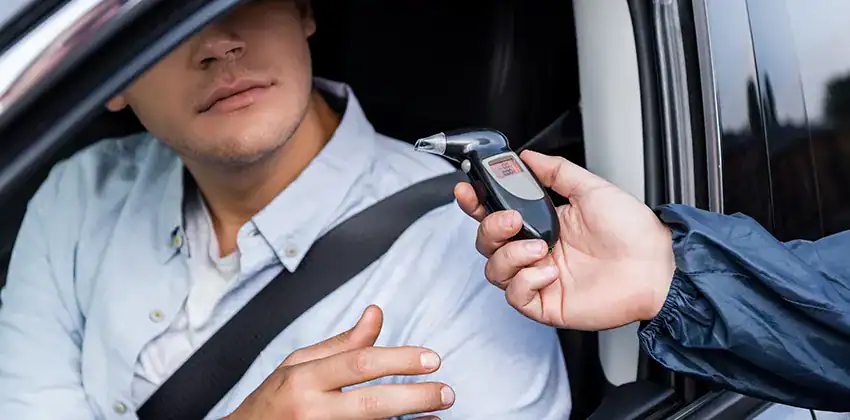
Reviewed against Virginia sources current as of August 26, 2026. The word “breathalyzer” is often used for two legally different processes: a roadside preliminary breath analysis and a post-arrest chemical breath test. Their purposes, refusal rules, and use in court are not the same. This page provides general information and does not determine whether a test, charge, suspension, or refusal allegation is valid in a particular case.
| Testing stage | Current Virginia framework |
|---|---|
| Roadside preliminary breath analysis | Virginia Code § 18.2-267 governs this preliminary test during a roadside investigation. A person has a statutory right to refuse it, and that refusal is not evidence in a prosecution for an offense listed in the section. The preliminary result is not admitted at the DUI trial. |
| Post-arrest chemical breath test | Virginia Code § 18.2-268.2 governs implied consent when its highway-operation, arrest, timing, and offense conditions are met. An unreasonable refusal of a required test is addressed separately by § 18.2-268.3. |
A page that treats both stages as one test can give the wrong answer about refusal, admissibility, or license consequences. The warrant or summons, arrest time, alleged location of operation, advisement, test records, refusal paperwork, and prior record can all affect the analysis.
Section 18.2-267 gives a person suspected of a listed DUI-related offense the right, if equipment is available, to have a preliminary breath analysis. The person may observe the process and see the reading. The Department of Forensic Science determines the proper method and equipment for this preliminary testing.
The same section gives a stopped and suspected person the right to refuse the preliminary analysis. It states that the refusal is not evidence in a prosecution for one of the listed offenses. An officer must advise the person of the rights in the section.
A preliminary reading indicating alcohol may be part of the charging-stage process, but § 18.2-267 states that the result is not admitted into evidence at the DUI trial. The section separately addresses use at a probable-cause suppression hearing if the officer did not give the required advisement. Those rules are different from the post-arrest test provisions.
Under § 18.2-268.2, a person who operates a motor vehicle on a Virginia highway is deemed to have consented to specified chemical testing if arrested for a listed offense within three hours of the alleged offense. For the alcohol-related provisions identified in subsection B, the statute calls for a breath test. If that test is unavailable or the person is physically unable to submit, a blood test is given. Drug and combined-influence allegations are addressed under separate language in the section.
Before a post-arrest breath test is administered, the accused must be advised of the right to observe the analysis and see the reading. If the equipment automatically produces a written printout, the printout or a copy must be given to the accused. Whether the implied-consent statute applies is a legal question that depends on the statutory conditions and the case record.
Virginia Code § 18.2-268.9 states that a chemical breath analysis must be performed by a person with a valid license, using a type of equipment and methods approved by the Department of Forensic Science, to be capable of being considered valid as evidence. The test certificate records specified information, including the test date and time, result, examiner, approved-procedure statement, and advisement about observing the process and seeing the reading.
The Virginia Department of Forensic Science Breath Alcohol Section trains and licenses operators, maintains and certifies evidential equipment used in Virginia, and provides records. The Department states that it certifies each evidential instrument for accuracy at least every six months. Virginia’s breath-alcohol testing regulations separately address approved devices, methods, licensing, records, checklists, and preliminary devices.
Section 18.2-268.9 makes certificate admissibility in a criminal case subject to the notice and objection framework in Virginia Code § 19.2-187.1. That statute contains time-sensitive procedures. Anyone with a pending matter should rely on the actual court filings and current legal advice, not a webpage, to calculate or protect a deadline.
Virginia Code § 18.2-268.11 also matters. It describes the testing steps in §§ 18.2-268.2 through 18.2-268.9 as procedural and states that substantial compliance is sufficient. Noncompliance does not by itself require a finding of not guilty; the statute allows evidence of noncompliance and resulting prejudice to be considered with the other evidence. A discrepancy therefore should not be described as an automatic exclusion, dismissal, or acquittal.
Virginia Code § 18.2-266 includes several alternative DUI theories. Clause (i) addresses a qualifying chemical-test result of at least 0.08 percent by weight by volume of alcohol in blood or at least 0.08 grams per 210 liters of breath. Other clauses separately address being under the influence of alcohol, drugs, or a combination of alcohol and drugs, as well as specified concentrations of certain drugs.
The 0.08 provision in § 18.2-266(i) is an independent statutory basis, not merely a generic “legal limit.” In specified impairment prosecutions, Virginia Code § 18.2-269 separately supplies rebuttable presumptions for qualifying chemical analyses: 0.05 or less, more than 0.05 but less than 0.08, and 0.08 or more are treated differently under that section.
A result below 0.08 does not categorically prevent an alcohol-impairment allegation under § 18.2-266(ii). A result at or above 0.08 does not remove the need to prove the applicable offense and address admissibility and other case-specific issues. Under § 18.2-268.10, admission of a blood or breath result does not prevent either side from introducing other relevant evidence, and the court considers other admissible evidence of the accused’s condition.
The roadside right to refuse under § 18.2-267 should not be confused with an alleged unreasonable refusal of a test required under the post-arrest provisions. Virginia Code § 18.2-268.3 treats a first unreasonable refusal of a required breath test as a civil offense with a one-year suspension. A breath-test refusal is a Class 1 misdemeanor only when, within 10 years before the refusal, the person was found guilty of a violation of § 18.2-268.3, DUI under § 18.2-266, or an offense listed in § 18.2-270(E) arising from a separate occurrence or incident. A conviction under that provision carries a three-year loss of the privilege to drive. A blood-test refusal remains civil; when the same qualifying prior-history conditions are met, it produces a three-year loss of the privilege to drive.
The refusal statute also specifies advisement and sworn-form procedures. Current subsection F permits a person found guilty of a first refusal and suspended under the identified first-offense provisions to petition for a restricted license. Any grant depends on good cause and statutory conditions, including ignition-interlock and alcohol-safety-program requirements; commercial-motor-vehicle operation is not authorized by that restricted license.
Under § 18.2-268.10, a finding of unreasonable refusal may be admitted in the DUI trial only to explain why no chemical test is present and may not be treated as evidence of guilt. This page does not advise anyone to take or refuse a test. The requested test, advisement, timing, medical circumstances, prior history, and paperwork require individual review.
Virginia Code § 46.2-391.2 provides an immediate administrative-suspension process when its post-arrest test or refusal, charging, and notice conditions are met. The stated period is seven days for a first-offense charge, 60 days for a second-offense charge, and generally until trial for a third-or-subsequent charge. The statute also provides a process for court review.
A roadside preliminary reading alone is not the trigger described in § 46.2-391.2. The administrative process is also distinct from any suspension or revocation that may follow a later conviction or refusal finding. The current page should not promise or predict a suspension, reinstatement, restricted license, vehicle disposition, or court result without reviewing the actual records.
Not every item exists or is available in every matter, and no single item establishes a defense or result. Relevance, admissibility, statutory compliance, prejudice, and the available procedural response depend on the facts and posture of the case.
The official Virginia Beach General District Court page publishes current location, contact, and scheduling information for DUI-related matters. Schedules can change. Start with the court and date shown on the charging papers, then verify current case information with the court. This page does not determine venue, appearance requirements, or the correct court for a particular charge.
Is a roadside preliminary result admitted at the DUI trial? Section 18.2-267 says no. The same section contains a separate rule concerning probable-cause use at a suppression hearing and the officer’s required advisement.
Is the roadside refusal rule the same as the post-arrest rule? No. Section 18.2-267 provides a right to refuse the preliminary analysis. Sections 18.2-268.2 and 18.2-268.3 govern the different post-arrest testing and unreasonable-refusal framework.
Does a reading below 0.08 end the inquiry? No. Virginia has separate test-result and impairment provisions. The charged clause and all admissible evidence must be considered.
Does a procedural difference always exclude a formal result? No. Section 18.2-268.11 makes substantial compliance sufficient and requires noncompliance and resulting prejudice to be considered with the evidence. The applicable record and legal issue still require review.
Can a lawyer guarantee suppression, dismissal, or a particular license result? No. A prior result, testimonial, ranking, or credential does not determine a pending case. No outcome should be promised.
The firm’s published attorney profiles identify Dante Wright and Maxie Lawton as co-founders and list DUI and serious traffic matters among their practice areas. The firm’s Hampton Roads DUI overview addresses the broader Virginia DUI framework. Separate pages discuss first-offense DUI and second-offense DUI. These links do not imply a result, ranking, case volume, or special forensic credential.
To ask whether the firm is available to review a pending Virginia DUI matter, call 757-777-9285 or use the firm’s contact page. Sending information does not mean the firm has accepted the matter and does not create an attorney-client relationship. Do not send confidential or time-sensitive information until the firm confirms how it should be provided.
This page is general legal information, not legal advice. Reading it or contacting the firm does not by itself create an attorney-client relationship. A Virginia attorney must review the facts, documents, and current law before advising on a particular matter.
Tell us what happened, or call 757-777-9285.
An inquiry does not create an attorney-client relationship; representation requires our agreement. Please wait for instructions before sending confidential or time-sensitive material.
"*" indicates required fields

1807 S. Church Street, Suite 200C
Smithfield, VA 23430
2 Eaton Street, Suite 900
Hampton, VA 23669
Copyright © 2026 The Phoenix Trial Firm• All Rights Reserved. Disclaimer | Site Map | Privacy Policy. Digital Marketing By: 
A welcome from our team
Welcome to The Phoenix Trial Firm. We help people across Hampton Roads with personal injury, criminal defense, DUI, and serious traffic matters. Tell us what brought you here, and our team will help you understand your next steps.
Get a Free Consultation Or call 757-777-9285Hampton Roads trial lawyers
We help injured people and those facing criminal, DUI, or serious traffic charges across Hampton Roads.
Offices in Hampton & Smithfield
Your first conversation
Choose the matter you want to discuss. See how to get started and what to have ready for the conversation.

Start with the collision, your questions, and the changes it has brought to your life.
Good to knowYou do not need every document to make your first inquiry.
Start a conversationTell us when and where the collision happened and how to reach you. A short description is enough to begin an inquiry.
Our team reviews your inquiry. The conversation can cover your injuries, treatment, missed work, insurance questions, and possible next steps.
If we agree to represent you, we explain the scope of our work, fees and costs, and the information needed to begin preparing your claim.

A focused first conversation starts with the matter, the court, and your immediate questions.
Good to knowThis guide introduces the firm’s inquiry process; it does not change any court instruction or deadline.
Start a conversationTell us the charge, the locality or court, and any upcoming court date. Include your contact information so our team can review your inquiry.
Have your charging papers and questions ready for the conversation. We can discuss whether Phoenix is available to review your matter and what a consultation would cover.
If we agree to represent you, we explain the scope of the work and the fee arrangement. Preparation then begins around your particular facts and circumstances.
The details on the summons help us understand the matter you want to discuss.
Good to knowFor DUI or DWI inquiries, choose Criminal defense & DUI above. This overview does not determine whether you must appear in court. That question requires a review of your specific matter.
Start a conversationTell us the charge description, locality or court, and date shown on your summons or later court notice. For speed-related matters, note the alleged speed and posted limit.
Our team reviews your inquiry so we can discuss the circumstances and possible next steps. Mention any work-related driving or license concerns you want considered.
If we agree to represent you, we explain the work covered and the fee arrangement. Your case is prepared around its specific charge, evidence, and circumstances.
Our clients. Our work.
We represent people facing injury, criminal charges, and serious traffic matters. Here are seven outcomes from our work.
Personal injury
Passenger injury recovery
We recovered $730,000 for a passenger injured when a vehicle turned into oncoming traffic.
Meet our personal injury attorney: Maxie Lawton
Read case detailsCriminal defense & DUI
DUI: second offense
Not guilty of second-offense DUI. A conviction on the separate refusal charge remained.
Read case detailsCriminal defense
Strangulation — Chesapeake Circuit Court
The strangulation charge was dismissed. The separate domestic assault and battery charge received a first-offender deferred disposition.
Read case detailsCriminal defense
Felony eluding
The Commonwealth chose not to proceed with the felony-eluding prosecution. Driver identification was the central issue.
Read case detailsCriminal defense
Domestic assault and battery
The court dismissed the charge after considering the client’s testimony, injury photographs, and cross-examination.
Read case detailsCriminal defense
Firearm charges · preliminary hearing
Both charges were dismissed at the Norfolk preliminary hearing and were not certified to circuit court.
Read case detailsSerious traffic
Reckless driving
A challenge to the radar evidence led to a granted motion to strike and dismissal of the reckless-driving charge.
Read case detailsPast results do not guarantee or predict a similar outcome. Every matter depends on its own facts and circumstances.
Passenger injury recovery
Our client was a passenger in a vehicle when the driver turned into oncoming traffic. A severe arm injury required emergency surgery.
The vehicle’s policy provided $250,000 in coverage. Phoenix pursued an underinsured motorist claim and stacked multiple policies for an additional $480,000 in coverage.
We recovered $730,000 for our client.
View our case resultsPast results do not guarantee or predict a similar outcome. Every matter depends on its own facts and circumstances.
Second-offense DUI and a separate refusal charge
A stop for failing to obey a highway lane marking led to charges of second-offense DUI and refusal of an official breath test.
The officer reported a slight odor of alcohol and slightly slurred speech. There were no field-sobriety or chemical test results. Phoenix challenged whether the evidence proved DUI beyond a reasonable doubt.
The court found the client not guilty of second-offense DUI because the evidence did not establish guilt beyond a reasonable doubt. The client was convicted of the separate refusal charge.
View our case resultsPast results do not guarantee or predict a similar outcome. Every matter depends on its own facts and circumstances.
Chesapeake Circuit Court
Our client faced strangulation and domestic assault and battery charges in Chesapeake Circuit Court following a physical altercation with a partner.
Dante Wright cross-examined the complainant about the reported effects of the altercation. The testimony included no loss of consciousness, no neck marks or bruising, and no hospital treatment or documented neck injury. The defense challenged whether the evidence established the bodily injury required for the strangulation charge and moved to strike.
The court granted the motion to strike and dismissed the strangulation charge. On the separate domestic assault and battery charge, the court found sufficient evidence but granted a first-offender deferred disposition. That charge was not dismissed at this stage.
View our case resultsPast results do not guarantee or predict a similar outcome. Every matter depends on its own facts and circumstances.
Felony eluding
A vehicle registered to our client was clocked at more than 100 mph and crashed near a wooded area after police gave chase. It was empty when the officer arrived. Our client was charged with felony eluding.
The vehicle’s registration and personal items linked it to our client, but the officer had no description identifying him as the driver. Phoenix challenged whether the evidence established who was driving. Our client reported the vehicle stolen that night and said he was elsewhere with a sibling.
The Commonwealth chose not to proceed with the felony-eluding charge, which was resolved by nolle prosequi in circuit court.
View our case resultsPast results do not guarantee or predict a similar outcome. Every matter depends on its own facts and circumstances.
Navy servicemember · Newport News
Our client, a Navy servicemember, faced a domestic assault and battery charge involving her child’s father.
Dante Wright called our client to testify about the incident, introduced photographs showing bruising and redness on her neck and injuries to her face, and cross-examined the complainant.
The Newport News Juvenile and Domestic Relations District Court dismissed the charge. Considering our client’s injuries and the absence of evidence of significant injuries to the complainant, the judge could not determine who was the aggressor.
View our case resultsPast results do not guarantee or predict a similar outcome. Every matter depends on its own facts and circumstances.
Norfolk General District Court
Our client faced charges of possession of a firearm by a convicted felon and second-offense carrying a concealed weapon at a preliminary hearing in Norfolk General District Court.
Dante Wright cross-examined the officers about the evidence linking our client to the firearm. Officers found an object resembling a gun holster on our client, but no firearm. The gun was recovered elsewhere outside an apartment complex, away from our client. No link to the client or the holster was established; fingerprint testing was inconclusive, and no DNA evidence connected him to the firearm.
Both charges were dismissed at the preliminary hearing and were not certified to circuit court.
View our case resultsPast results do not guarantee or predict a similar outcome. Every matter depends on its own facts and circumstances.
A challenge to the radar evidence
Our client faced a reckless-driving charge involving a radar speed measurement.
At trial, the officer could not confirm that the radar had been checked before and after the shift and found accurate. No calibration certificate was presented. Dante Wright moved to strike the evidence.
The court granted the motion to strike and dismissed the reckless-driving charge.
View our case resultsPast results do not guarantee or predict a similar outcome. Every matter depends on its own facts and circumstances.
Answers before your first call
Understand the records to preserve, insurance questions to ask, and how we help injured drivers and passengers.
Read the car-accident guide →Follow the process from investigation and treatment documentation through negotiation and, when appropriate, litigation.
Explore the claim process →Get to know Phoenix
Meet the people behind the firm and learn what to expect when you reach out.
A quick introduction from Dante Wright